
Tips
What Causes Uneven Cooling in Open-Plan Offices?
We have all been there. You are sitting at your desk in a jumper while the person three metres away is practically fanning themselves with


To reduce noise from ducted air conditioning in open offices, start by identifying the source, usually excessive airflow, vibration, or poor duct design. Adjusting fan speed, resizing ducts, and adding acoustic insulation can lower sound levels without affecting comfort.
In open-plan areas, sound travels easily, and even small vibrations can become distractions. Understanding the cause of the noise helps apply targeted solutions that maintain comfort and quiet operation.
This guide explains the main sources of air conditioning noise and outlines practical ways to minimise it in open offices.
Noise in ducted air conditioning systems often comes from airflow, pressure, and vibration. Fast-moving air creates turbulence inside ducts, especially when the system operates at high velocity to serve large spaces. Static pressure builds when ducts are too narrow or airflow is restricted, causing whistling or hissing at outlets.
Equipment vibration from motors or fan assemblies can transfer through ceilings or duct supports, producing low-frequency noise. Flexible ducts may move slightly with airflow or temperature changes, adding to sound levels. Return air grilles are another common source; if undersized or blocked, they create suction noise and air imbalance.
Identifying which of these issues applies to a specific office is the first step toward reducing noise effectively.
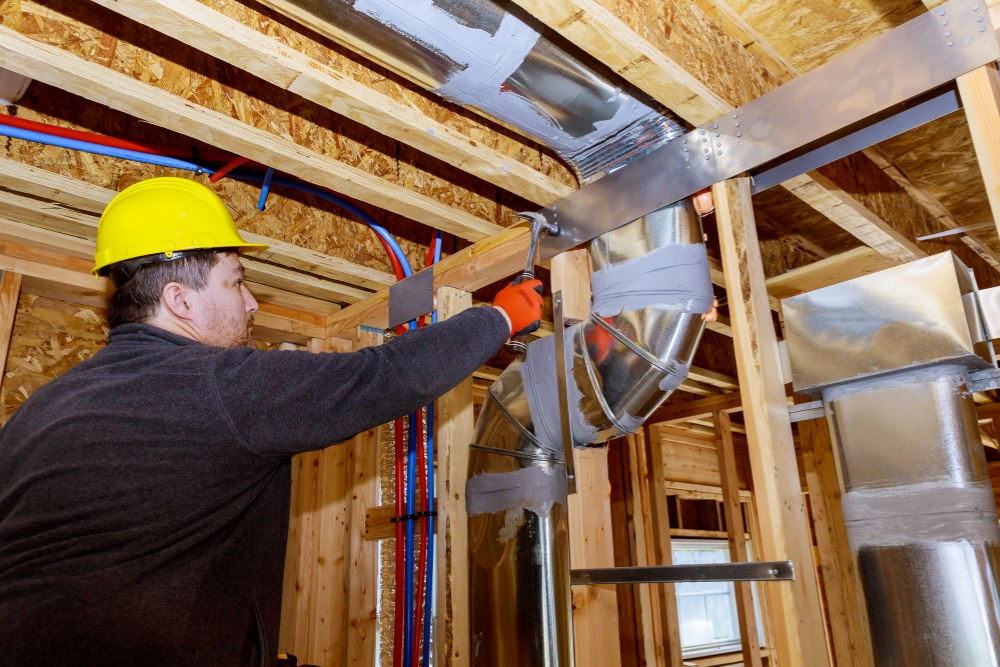
Fan speed and airflow directly affect how loud a ducted system sounds. When air moves too quickly, turbulence increases and noise rises. Reducing fan speed to match the room’s cooling demand lowers airflow velocity and sound. Balancing airflow across diffusers prevents pressure build-up in specific zones.
Measuring air volume at each outlet ensures that flow matches design requirements and maintains quiet operation. In open offices that undergo layout changes, airflow should be rebalanced to match the new arrangement. These adjustments allow consistent comfort with minimal noise.
Duct size and layout determine airflow efficiency and noise levels. When ducts are undersized or contain tight bends, air pressure increases and turbulence develops. Main ducts should maintain velocities between five and seven metres per second to keep airflow quiet and steady.
Sharp turns, long runs, and restrictive fittings raise resistance and cause vibration or whistling. Reviewing the layout can identify areas that need resizing or additional return ducts to balance pressure. Systems designed in line with ventilation standards such as AS 1668.2 maintain proper air movement and lower acoustic output.

Acoustic insulation and damping materials reduce sound travelling through ducts. Lined or insulated ducts absorb airflow noise and are particularly useful near return air paths or quiet zones. Installing attenuators or silencers between the indoor unit and main ducts can further lower sound transmission.
Flexible connectors separate vibration between metal ducts and the unit, preventing mechanical noise from spreading through the structure. All joints should be sealed to stop air leaks that create whistling sounds. In sensitive areas, external sound wraps can be added around ducts for additional noise reduction.
The type and placement of vents influence how air moves and how much noise the system produces. Low-velocity diffusers distribute air evenly and reduce turbulence at outlets. Larger or acoustic-backed grilles minimise suction noise on return air paths. Diffusers should be positioned away from reflective surfaces and workstations to reduce perceived sound.
Keeping vents clean ensures consistent airflow and prevents debris from disrupting air patterns. Correct vent design maintains stable sound levels across open workspaces.

Vibration from the indoor fan coil unit can travel through the ceiling structure and amplify across open office areas. Mounting the unit on isolation pads or spring mounts prevents vibration from transferring into the framework. Flexible duct connectors made from acoustic materials further reduce structure-borne sound between the unit and ductwork.
Fan and motor components should be inspected to identify wear, imbalance, or loose parts that can increase noise. Bearings and fasteners need to be kept in good condition to maintain quiet performance. Ceiling supports and mounting frames should also be checked for movement and reinforced when needed to limit vibration.
Scheduled maintenance and correct isolation methods prevent noise from developing and ensure the system continues to operate quietly and efficiently in open-plan environments.
A quiet and comfortable open office depends on how well the commercial air conditioning system manages airflow and sound. Efficient airflow maintains stable temperatures without creating background noise.
Low airflow velocity helps reduce turbulence and vibration. Air should move smoothly through ducts and outlets to avoid pressure build-up and noise. Narrow ducts or small diffusers increase air speed, causing turbulence and higher sound levels.
Clean filters, balanced duct pressure, and correct fan speed keep the system operating quietly, with sound levels ideally below 45 decibels. Well-designed systems maintain both comfort and acoustic performance in shared workspaces.
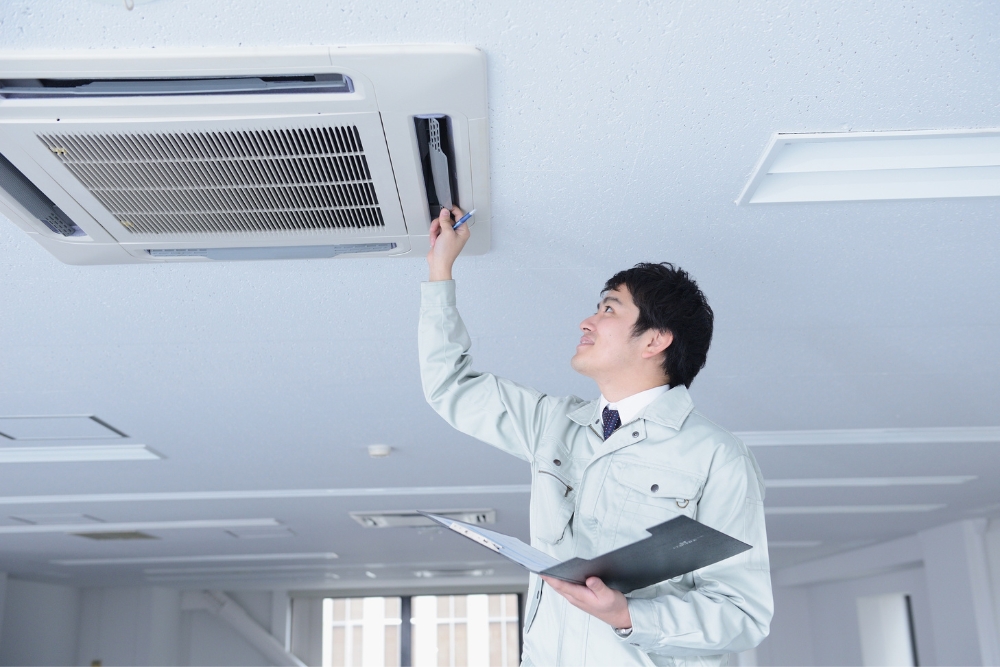
Noise issues in ducted air conditioning systems can often be reduced through accurate assessment and careful adjustment. Identifying the cause, reviewing duct layout, and applying targeted acoustic measures keep systems efficient and quiet.
Coles Refrigeration assists commercial clients across Newcastle, Lake Macquarie, and the Central Coast with air conditioning design, installation, and maintenance. The team evaluates airflow, vibration, and duct configuration to improve comfort and acoustic performance in open offices.
Contact us to arrange a system assessment or discuss practical solutions for managing noise in ducted commercial air conditioning.
Yes. Open offices without partitions allow sound from vents and ducts to travel further. Ceiling height, surface materials, and workstation placement also influence how sound spreads.
Most open workplaces aim for background noise around 40–45 decibels to maintain comfort and speech clarity.
Fluctuating airflow, vibration through the ceiling, or noticeable changes in sound when fan speed adjusts indicate airflow imbalance or poor duct configuration.
An acoustic inspection is recommended after any office layout change or air conditioning upgrade, as these can alter airflow and increase sound levels.
Yes. Older systems can be improved with insulated ducts, acoustic grilles, or vibration isolation components, reducing noise without replacing the entire unit.
We have all been there. You are sitting at your desk in a jumper while the person three metres away is practically fanning themselves with

You know the scenario. You’ve got the ducted air con set to a comfortable 24°C. The living room feels perfect. But walk down the hallway