
Tips
What Causes Uneven Cooling in Open-Plan Offices?
We have all been there. You are sitting at your desk in a jumper while the person three metres away is practically fanning themselves with

Commercial bakeries face unique challenges when it comes to maintaining a safe and efficient working environment. Heat from ovens, moisture from steam, and airborne particles like flour dust can all create problems if not properly managed. Without the right ventilation, these factors can impact food safety, shorten equipment life, and affect staff comfort.
Poor ventilation can also lead to condensation, mould growth, and the accumulation of grease vapours, each posing health and safety risks. In some cases, airborne flour particles can create explosion hazards if allowed to build up. These issues can result in costly repairs, compliance problems, or even interruptions to operations.
An effective ventilation system addresses these challenges by managing heat, controlling humidity, and filtering out contaminants. Meeting NSW Health and safety regulations ensures bakeries operate within legal requirements while protecting product quality and staff wellbeing.
The right system creates a cleaner, safer environment that supports consistent production and long-term business performance.
Air quality directly affects the efficiency, safety, and output of a commercial bakery. Heat from ovens and proofers can quickly raise internal temperatures, making the workspace uncomfortable and potentially unsafe for staff. Over time, this can reduce productivity and morale.
Humidity is another key factor. Steam from baking can cause condensation, which may affect product texture and quality. Excess moisture can also encourage mould growth and shorten the lifespan of sensitive equipment. In areas with varied seasonal conditions, such as the hunter valley, managing humidity is essential for consistent results.
Flour dust, grease vapours, and carbon dioxide emissions present further challenges. Flour dust can cause respiratory issues and, in high concentrations, pose explosion risks. Grease vapours can make surfaces slippery and increase fire hazards. Effective ventilation helps remove these airborne contaminants, reduces safety risks, and supports compliance with food handling regulations. Maintaining the right air quality is essential for both operational safety and product quality.
Commercial bakeries require specialised ventilation to manage heat, steam, grease vapours, and airborne particles. One of the most important components is a dedicated exhaust hood and canopy system positioned over ovens, fryers, and other heat-producing equipment. These capture steam, heat, and odours at the source, preventing them from spreading through the workspace. Grease filters are essential for fire safety and keeping ductwork clean.
Make-up air systems are equally important. As air is removed from the bakery, it needs to be replaced with fresh, conditioned air to prevent negative pressure. Negative pressure can make doors hard to open, reduce the efficiency of exhaust fans, and allow contaminants to linger. Make-up air can be heated in cooler months or cooled in warmer periods, ensuring a comfortable environment for staff.
Well-designed commercial bakery ventilation systems balance extraction and fresh air intake to maintain safe, efficient operations. Correct sizing and installation help ensure these systems handle the high demands of bakery production without compromising energy efficiency or indoor comfort.
Beyond targeted extraction over equipment, general air management plays a key role in bakery operations. Heating, ventilation, and air conditioning (HVAC) systems help regulate overall temperature and airflow, keeping conditions stable across different zones. Separating production and customer areas can allow each to be maintained at optimal comfort and safety levels.
Flour dust is one of the most persistent challenges in bakeries. High-quality filtration within the ventilation system can capture fine particles, reducing respiratory risks for staff and lowering the chance of dust explosions. A well-planned system design can also minimise areas where dust settles, improving air circulation and cleanliness throughout the facility.
Grease vapours from frying or baking oily goods should also be addressed. Without proper removal, they can coat surfaces, create slip hazards, and increase fire risk. Routine cleaning of ductwork and filters ensures these contaminants do not accumulate. Together, these measures support a safer working environment, protect equipment, and maintain consistent product quality.
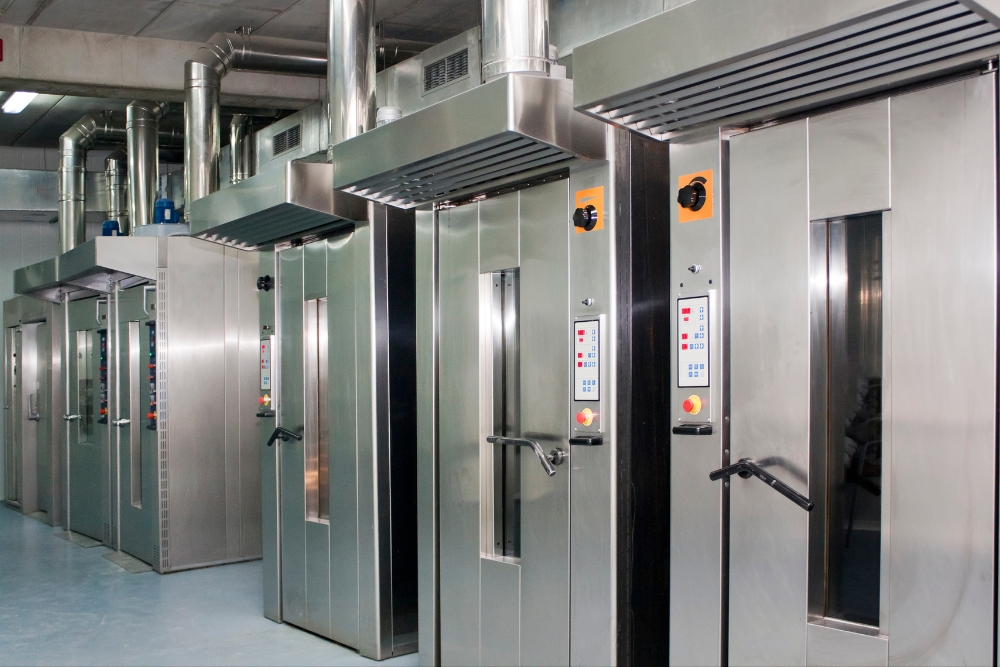
Bakery ventilation systems require scheduled cleaning and servicing to operate effectively. Grease filters, ducts, and fan components need to be cleaned to prevent blockages, maintain airflow, and reduce fire hazards. Routine cleaning also supports energy efficiency by allowing the system to run without obstruction.
Periodic inspections can identify worn parts, damaged components, or airflow restrictions before they cause breakdowns. Filtration units should be checked to confirm they are removing flour dust and grease particles as intended.
Maintaining detailed service records helps meet workplace safety and food handling compliance requirements. Regular upkeep extends the life of the ventilation system, ensures it functions to specification, and maintains the environmental conditions needed for safe bakery operations.
Selecting and maintaining the right ventilation system is essential for managing heat, humidity, and airborne particles in a commercial bakery. The correct setup protects staff health, preserves product quality, and helps equipment operate efficiently.
Coles Refrigeration & Air Conditioning provides design, installation, and servicing for ventilation systems suited to bakery operations. Their team can assess site requirements, recommend suitable equipment, and ensure installation meets operational and compliance needs.
Engaging experienced professionals for installation and ongoing servicing ensures the system performs to specification and continues to meet regulatory standards. Contact the team to arrange an assessment and discuss ventilation solutions that align with production demands and workplace requirements.
Most systems benefit from servicing at least every six months. High-use bakeries may require more frequent cleaning and inspections.
While possible, separate systems or zoning often work better to meet different temperature, airflow, and comfort requirements.
High-efficiency particulate air (HEPA) filters or specialised fine dust filters are effective for capturing flour particles.
Yes. A well-designed and maintained system can reduce energy use by improving airflow and reducing strain on heating and cooling equipment.
Yes. Systems must meet workplace safety and food handling regulations to ensure safe conditions for staff and customers.
We have all been there. You are sitting at your desk in a jumper while the person three metres away is practically fanning themselves with
You know the scenario. You’ve got the ducted air con set to a comfortable 24°C. The living room feels perfect. But walk down the hallway