
Tips
What Causes Uneven Cooling in Open-Plan Offices?
We have all been there. You are sitting at your desk in a jumper while the person three metres away is practically fanning themselves with

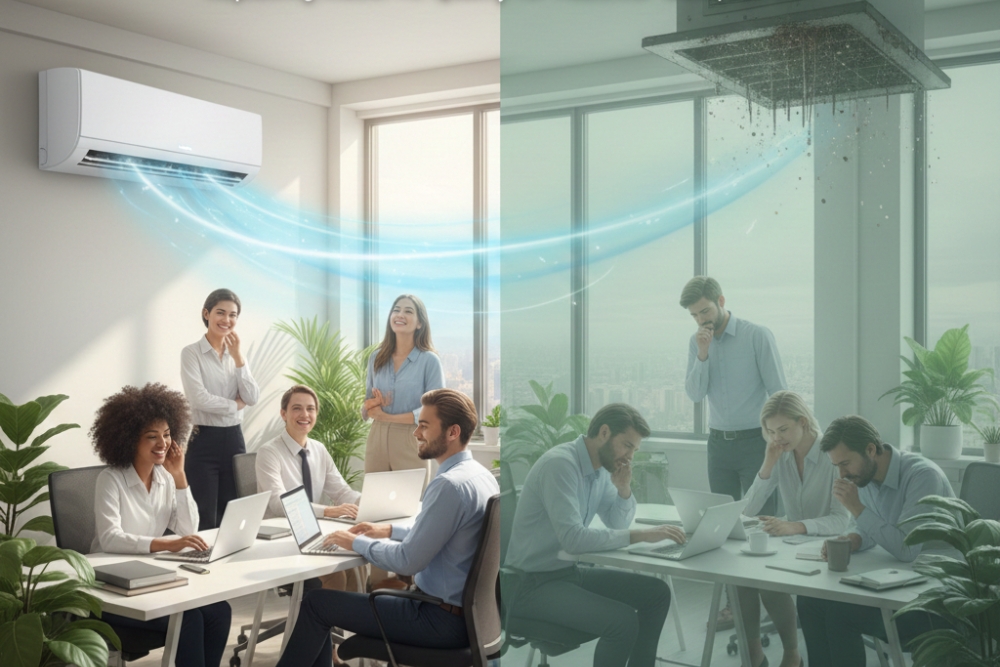
You know the feeling. You walk into the office at 8:30 am feeling fine. By 2:00 pm, your eyes are dry, you have a dull headache, and you feel tired even though you had plenty of sleep.
It’s not just the afternoon slump. It’s often the building itself.
We call this Sick Building Syndrome (SBS). It sounds dramatic, but it’s a genuine issue recognised by health organisations. In older Newcastle office blocks or poorly renovated commercial spaces, it’s surprisingly common.
The good news? Your air conditioning system is your first line of defence against it, provided it’s set up right.
The biggest cause of that groggy afternoon feeling is usually Carbon Dioxide (CO2).
In a sealed office building, you have 10, 20, or 50 people breathing out CO2 all day. If the air conditioning is just recirculating that same air repeatedly to keep it cool, CO2 levels spike.
When CO2 climbs above 1,000 parts per million (ppm), cognitive function drops. People make mistakes. They get headaches. They get grumpy.
Many people think air conditioning just cools air. But a proper commercial system has a job that is equally important: Ventilation.
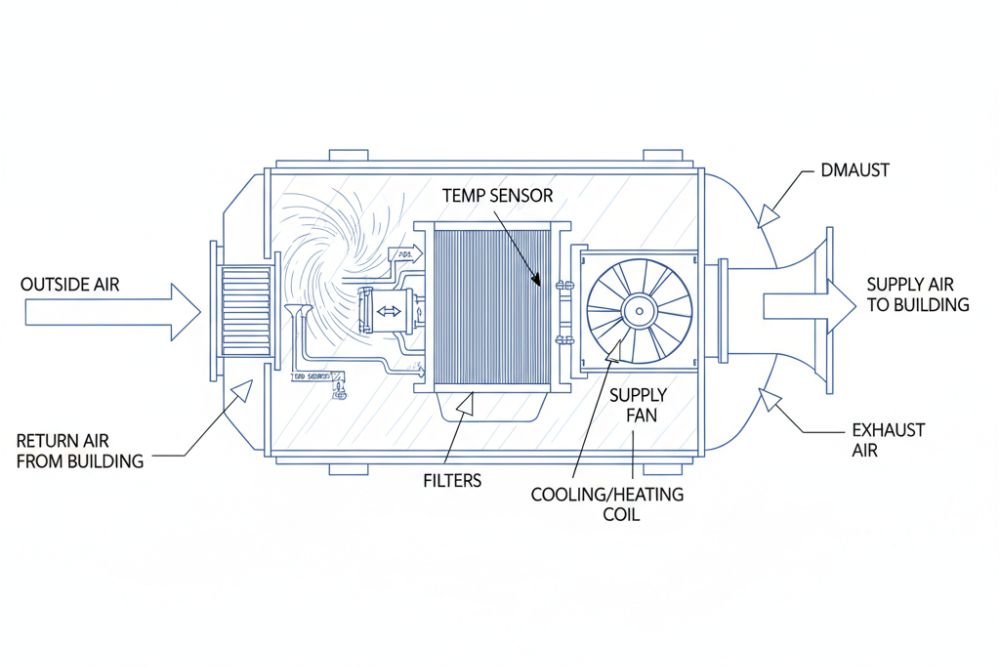
Unlike the split system on your bedroom wall which mostly just recirculates room air, a commercial ducted system is designed to breathe.
It should have a Fresh Air Intake. This is a dedicated duct that pulls air from outside, filters it, cools it, and mixes it with the return air from the office.
This dilutes the CO2 and flushes out contaminants (like VOCs from carpets, printer toner, and cleaning chemicals).
This is a critical part of building compliance. In fact, we refer to the Spotlight on AS 1668:2024, which outlines the specific ventilation requirements to ensure indoor air quality remains safe for occupants. If your office feels stuffy, your system might have:
Newcastle has its fair share of dust. Between the coal dust in the air near the port and the pollen in spring, your office air filters can take a beating.
Standard filters (usually graded G4) catch the big stuff like lint and visible dust. But they don’t catch the microscopic particles that irritate lungs and eyes.
To really tackle Sick Building Syndrome, we often look at upgrading filtration to F7 rated filters or higher. These trap fine particulates and pollen before they get into the office air.
Note that you can’t just shove a high-grade filter into any old unit. The fan motor needs to be strong enough to push air through the denser material. If not, you’ll burn out the motor.
This is the one most people miss.
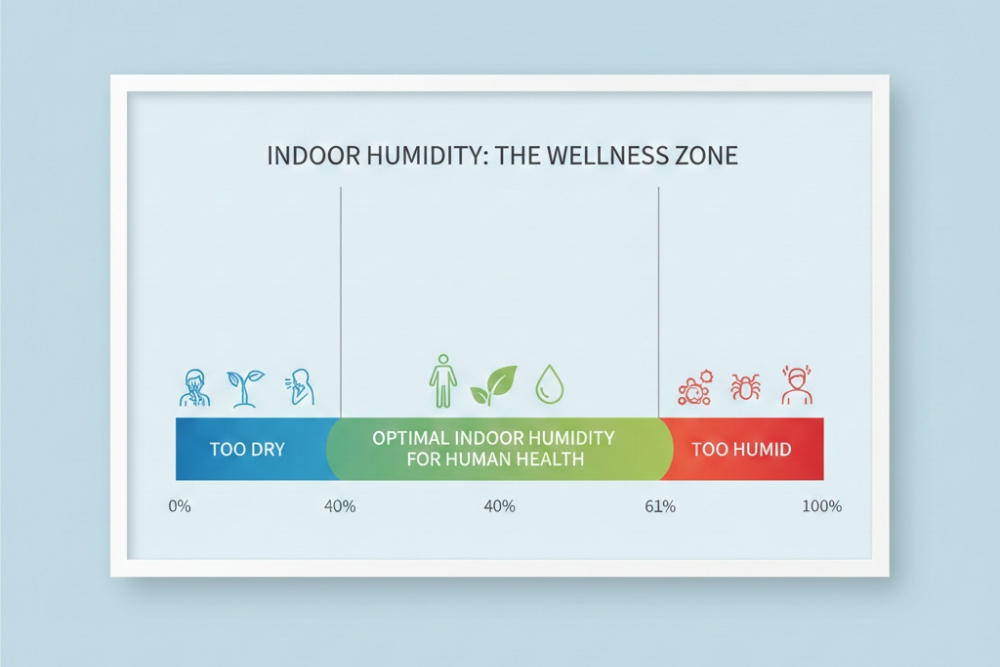
Newcastle gets humid. If your AC is oversized (too powerful for the space), it cools the room down so fast that it turns off before it has removed the moisture from the air.
Too humid (over 60%) means mould grows in ducts and carpets. Dust mites thrive. This triggers asthma and allergies.
Too dry (under 30%) means viruses spread easier, and eyes or throats get scratchy.
Your system needs to keep the office in the “Goldilocks Zone” between 40% and 60% relative humidity.
If your office has these symptoms, your AC might be the culprit:
These are signs that the system is dirty or unbalanced. A dirty cooling coil is a perfect breeding ground for bacteria, which the fan then kindly blows directly onto your staff.
Regular maintenance isn’t just about preventing breakdowns. It is about hygiene.
If you manage a building or run an office, you don’t have to put up with sick staff.
If you suspect your building is making people sick, we can help. Our team provides comprehensive commercial air conditioning services where we can assess your fresh air ratios, test humidity levels, and clean out the contamination that’s built up over the years. A healthy building means a productive team. It’s worth getting right.
We have all been there. You are sitting at your desk in a jumper while the person three metres away is practically fanning themselves with
You know the scenario. You’ve got the ducted air con set to a comfortable 24°C. The living room feels perfect. But walk down the hallway